
Boxing Handwraps 101: Why You Need Them and How to Wrap Your Hands
Handwraps for boxing protect the small bones in your hand, not your knuckles. Coach Ian Sampaga explains what handwraps do, how to put them on, and how fighters wrap with gauze and tape.
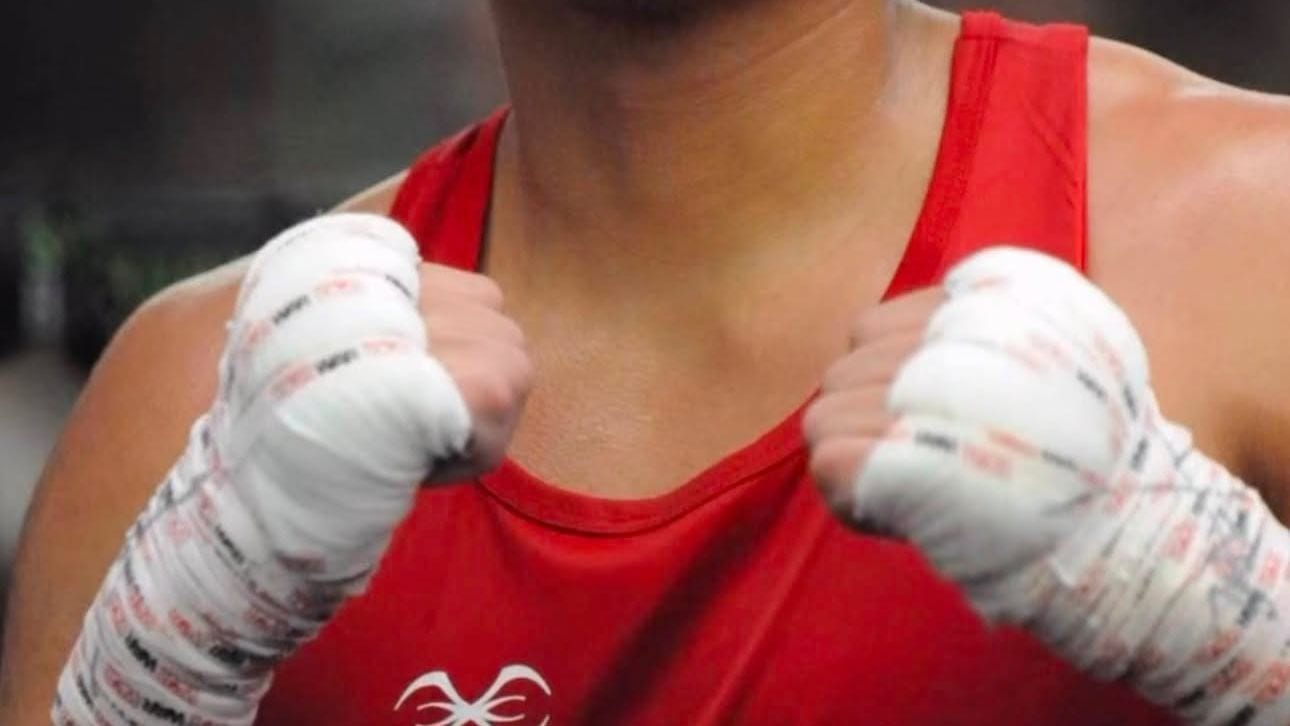
Quick answer: Handwraps for boxing exist to compress the 27 small bones of your hand into one solid unit and to support your wrist on impact. They are not padding. Padding is what the glove is for. If you skip the wraps, every punch you throw travels through loose, independently moving bones, and that is how hands get hurt.
I have been wrapping hands at Ironhand Boxing since we opened in 2021, and it is the first thing I teach a new boxer before they ever touch a bag. Below is what handwraps actually do, how to put them on step by step, and how we wrap differently on fight night.
What are handwraps for in boxing?
Handwraps are a long strip of cotton or semi-elastic fabric, usually 180 inches, that you wind around your wrist, palm, thumb, and knuckles before putting on your gloves. Their job is structural, not protective in the cushioning sense.
Three things a handwrap does:
- It binds the metacarpals together. Your hand has 27 bones. Punching with them loose is like swinging a bag of marbles. Wrapped, they act as a single mass.
- It braces the wrist. Most beginner hand injuries are not broken knuckles, they are wrist sprains from a fist that folded on contact. The wrist anchor is the most important part of the wrap.
- It locks the thumb in. A thumb that drifts away from the fist during a hook is a thumb that catches on an elbow or a headgear strap.
Here is the part most people get backwards: the wrap is not there to pad your knuckles. The glove does that. The wrap tightens the hand into a solid fist so the fingers and knuckles do not collapse into each other.
Why do I need handwraps?
Because the alternative is a hand injury that takes you out of training for six to twelve weeks and, in the case of a boxer’s fracture, can leave a permanent knuckle deformity.
You need handwraps if you are:
- Hitting a heavy bag. The bag does not move much. All that force comes back into your hand.
- Doing mitt work. Coaches move the pads. You will land off-center, and off-center is where wrists roll.
- Sparring. Even with 16 ounce gloves, sparring is the highest-volume impact work most amateurs do.
- Renting gym gloves. Wraps also absorb sweat and keep the inside of a glove from turning into a petri dish.
The only time you can reasonably skip them is shadowboxing and jump rope. Everything else, wrap up. Our group classes all include bag work and mitt work, so bring wraps to any of them. Wraps are also non-negotiable the day you start sparring, which for most beginners is three to six months in.
A common objection I hear from new boxers is that wraps feel restrictive. That is the point. If your hand can move freely inside the wrap, the wrap is not doing its job.
Wrapping properly is the first of the boxing fundamentals we teach, and it is the one that keeps you training instead of sitting out with a bad wrist.
What handwraps should you buy?
For anyone training two to five days a week:
| Type | Length | Best for |
|---|---|---|
| Standard cotton | 180” | Most adults, all-purpose training. The default answer. |
| Mexican style (semi-elastic) | 180” | Slightly more stretch, conforms tighter, most popular in gyms. |
| Cotton, shorter | 120” | Smaller hands, teens, or wrapping under bag gloves with less room. |
| Gel/quick wraps | N/A | Convenience only. Fine for a class you are late to. Not a substitute for a real wrap on bag or sparring days. |
Buy at least three pairs so you always have a clean set. Wash them in a mesh laundry bag on cold and hang dry. Heat kills the elastic.
If you are coming to your first class, do not buy anything yet. We will wrap your hands for you and a coach will tell you what is actually worth spending money on once you know you are staying.
How to put on handwraps for boxing
This is the method we teach on day one. Roll the wrap with the loop side facing out before you start.
Fight night: gauze and tape
Everything above is a training wrap. Once you step into a sanctioned fight, the rules change and so does the material.
When we fight, we use gauze and tape.
Fight wraps are built from surgical gauze and athletic tape rather than a reusable cloth wrap. Gauze conforms to the hand far more precisely, and tape locks each layer down so nothing shifts across ten rounds. The result is a harder, more custom-fitted structure than any cloth wrap can produce.
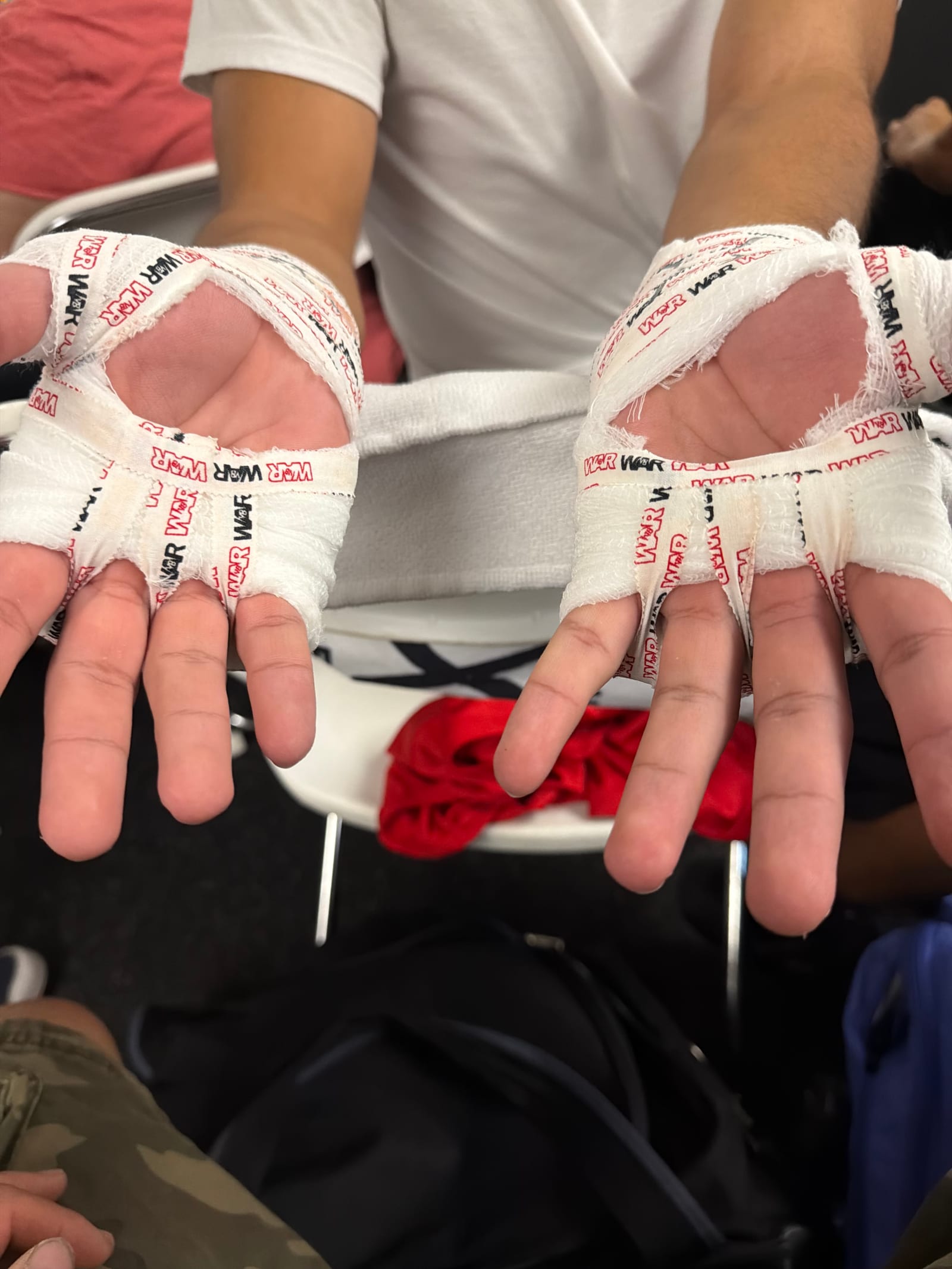
The rules vary slightly by sanctioning body, but the general amateur and professional standard limits the gauze to roughly 20 yards of two-inch soft gauze per hand and the tape to about 10 feet of one-inch athletic tape per hand. Tape cannot cover the knuckles. It runs between the fingers and anchors the wrist. Both corners typically observe the wrapping, and an official initials the finished wrap before the gloves go on.
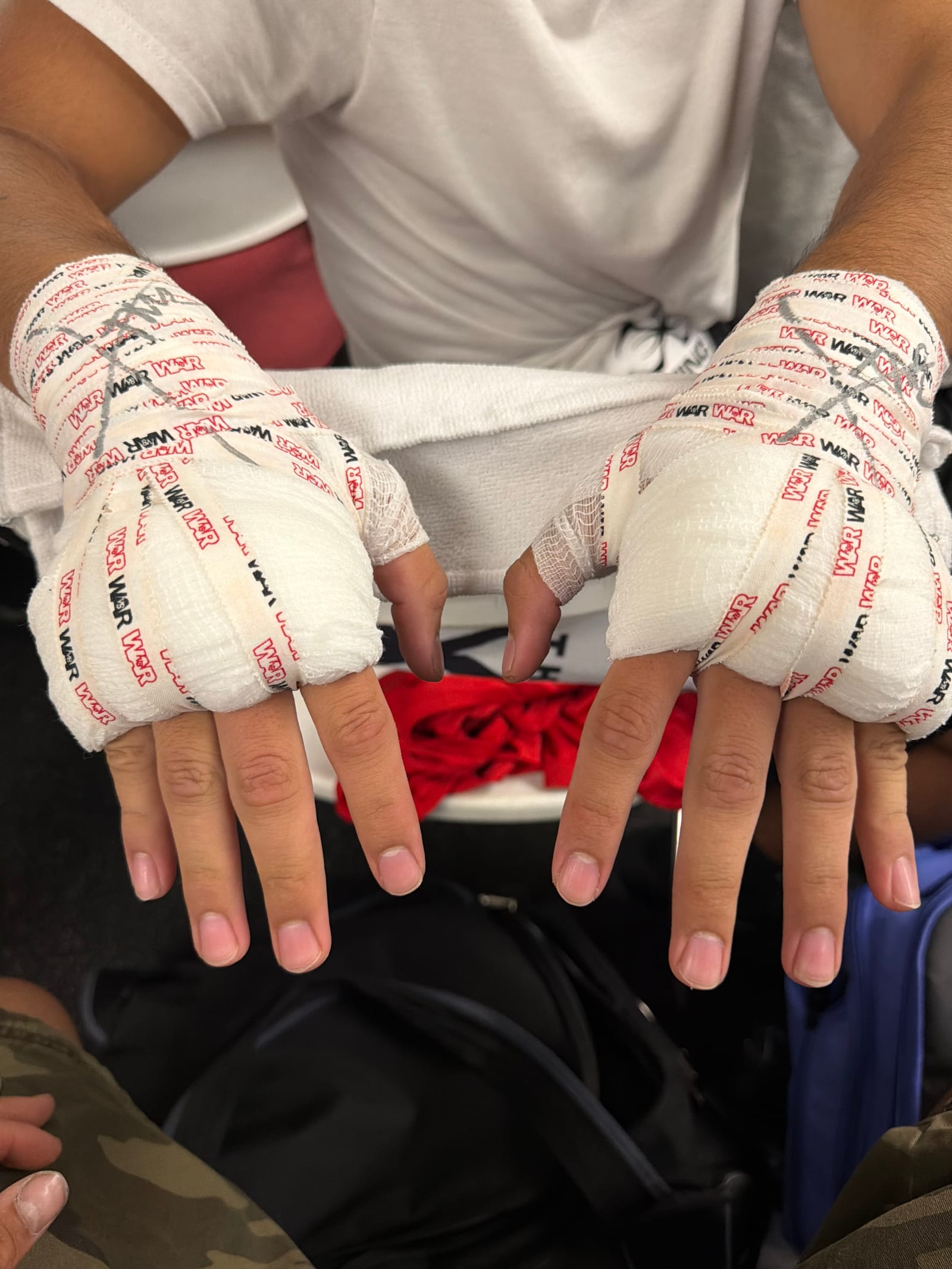
That signature across the back of the hand is the official confirming the wrap was applied legally and has not been touched since. A fight wrap is a skill, and a bad one costs a fighter a round. If you are competing out of Ironhand, I wrap your hands.
Common handwrap mistakes
- Wrapping the thumb loop in the wrong direction. The single most common error. It undoes the whole wrap.
- Starting at the knuckles. Always anchor at the wrist first.
- Wrapping too tight. White fingertips, tingling, or a pulsing sensation means unwrap and start over. You want compression, not a tourniquet.
- Skipping the X’s between the fingers. Those are what actually spread the load across the hand.
- Never washing them. Wraps hold sweat. Unwashed wraps are how gym staph starts.
- Wrapping over a fresh injury without seeing a doctor. A wrap will let you keep training on a fracture. That is not a good thing.
Train at Ironhand Boxing
We are a Staten Island boxing gym founded in 2021, teaching real boxing fundamentals to beginners, fitness clients, and competitors. Come to your first class and we will wrap your hands for you and teach you to do it yourself.
- Set the thumb loop. Put the loop over your thumb so the wrap runs away from the thumb, not toward it. Running it the wrong direction causes the wrap to loosen when you close your fist, and it will slide off mid-round.
- Anchor the wrist. Make three firm passes around the wrist. This is the anchor for the entire wrap. Firm, not choking.
- Wrap the palm. Make three passes around the palm, just below the knuckles.
- Make three X patterns between the fingers. From the base of the thumb, run an X between the pinky and ring finger, then between the ring and middle finger, then between the middle and index finger, returning to the base of the thumb after each.
- Wrap the thumb. Make one full pass around the thumb.
- Lock the thumb. Flip the wrap over and come around the thumb again, running straight down rather than all the way around. That reversal locks the thumb wrap so it cannot slip.
- Wrap the knuckles. Make three passes around the knuckles.
- Use the remaining length. Use up the rest of the wrap with X patterns across the back of the hand, alternating between the wrist and the knuckles.
- Secure at the wrist. Fasten the wrap at the wrist, never mid-hand. Make a fist to check the fit: it should feel like one solid unit, with no tingling and no loss of circulation.
Questions we get asked
Why do I need handwraps?
Handwraps bind the 27 small bones of your hand into a single unit and brace your wrist so it does not fold on impact. Without them, punching a bag or pads sends force through loose bones and an unsupported wrist, which is the most common cause of hand and wrist injuries in boxing.
What are handwraps for in boxing?
Handwraps provide structure and compression, not padding. They hold the metacarpals together, support the wrist, secure the thumb, and absorb sweat inside the glove. Cushioning against impact is the job of the boxing glove.
How do you put on handwraps for boxing?
Start with the loop over your thumb running away from the thumb, make three passes around the wrist, three around the palm, three X patterns between the fingers, one pass around the thumb, then reverse the wrap to lock the thumb, three passes around the knuckles, and finish by securing at the wrist.
How long should boxing handwraps be?
180 inches is the standard length for most adults. 120 inch wraps suit smaller hands, teens, and anyone whose gloves run tight.
How tight should handwraps be?
Snug enough that your hand feels like one solid unit when you make a fist, loose enough that your fingers keep normal color and sensation when your hand is open. Tingling or numbness means the wrap is too tight.
Do you wear handwraps under boxing gloves?
Yes. Handwraps always go on before the gloves, and the glove is what compresses the wrap into its final tightness.
What is the difference between training wraps and fight wraps?
Training wraps are reusable 180 inch cloth or Mexican style wraps. Fight wraps use surgical gauze and athletic tape, are applied by a coach, are inspected and initialed by an official, and are cut off after the fight.
Do beginners need handwraps?
Beginners need them most. Newer boxers have less developed wrist stability and less refined punch mechanics, which is exactly the combination that produces injuries.
How do you wash handwraps?
Wash in cold water inside a mesh laundry bag, then hang dry. Machine drying degrades the elastic in Mexican style wraps. Own at least three pairs so you always have a clean set.
Can I use gel wraps instead of handwraps?
Gel or quick wraps are fine for a fitness class or a light session. For heavy bag work and sparring, use a real 180 inch wrap. Gel wraps provide almost no wrist support.
Keep reading
The Importance of Boxing Fundamentals: Why the Basics Win Fights
Stance, footwork, the jab, defense, and balance. Coach Ian Sampaga explains the boxing fundamentals every beginner needs and why skipping them caps how good you can get.
How Long Before You Can Spar? And How Long Until You Can Compete?
Most beginners spar within 3 to 6 months, but the real answer depends on the person. Coach Ian Sampaga explains what he looks for before clearing a boxer to spar, and how he decides when a fighter is ready to compete.