
How Long Before You Can Spar? And How Long Until You Can Compete?
Most beginners spar within 3 to 6 months, but the real answer depends on the person. Coach Ian Sampaga explains what he looks for before clearing a boxer to spar, and how he decides when a fighter is ready to compete.
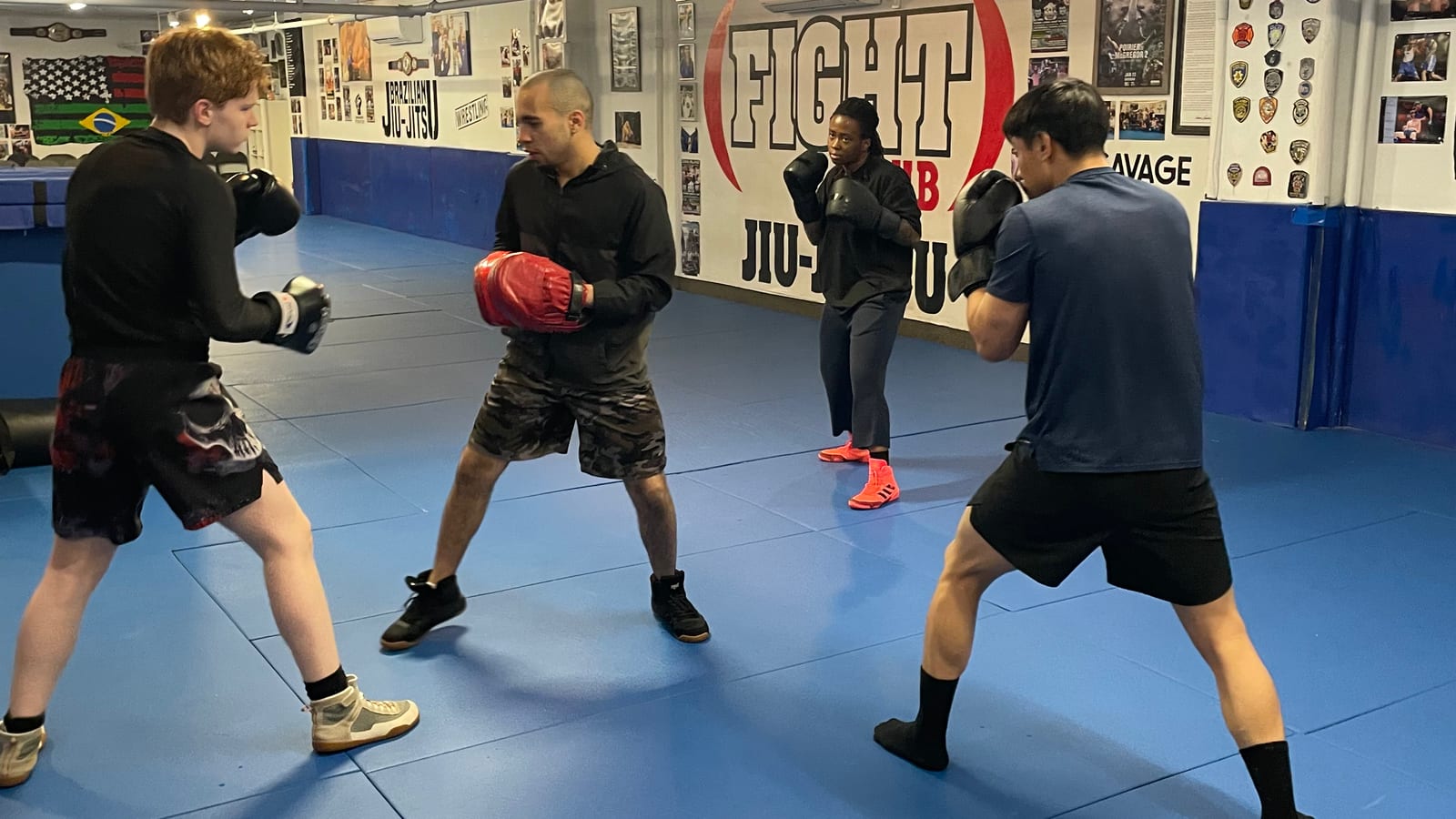
Quick answer: Most beginners at a well-run gym start light, controlled sparring somewhere between three and six months of consistent training, usually two to four sessions a week. But that range is an average, not a rule. The honest answer is that it depends entirely on the person. Competing is a separate question with a separate timeline, and it is always the coach’s call.
I get asked this in the first week by almost every new boxer who walks into Ironhand. Below is the real answer: what sparring actually is, what I am looking for before I clear someone, why the timeline varies so much, and how I decide whether a boxer is ready to compete.
What is sparring in boxing?
Sparring is controlled, live practice against a real opponent who is punching back. It is not a fight. It is a training tool with rules, agreed intensity, and a coach supervising every round.
There are levels to it, and this is where most people get confused:
- Technical sparring. Very light contact, often one boxer working offense and the other working defense only. Sometimes just jabs. This is where everyone starts.
- Light or controlled sparring. Both boxers working, but with power dialed way down. The goal is timing, distance, and reacting under pressure. Most gym sparring lives here permanently.
- Hard sparring. Near fight intensity. Reserved for competitors preparing for a bout, and even then it is used sparingly because it accumulates real damage.
When people ask “how long before I can spar,” they almost always mean the first two. Nobody goes from day one to hard sparring, at any gym worth training at.
Standard gear for sparring is 16 ounce gloves, headgear, a mouthguard, a groin protector, and properly wrapped hands. If you are not sure how to wrap, read our handwraps guide first, because a bad wrap is the fastest way to end a sparring session early.
How long before you can spar? The honest answer
Three to six months of consistent training is the range I would give most adults starting from zero. Some are ready sooner. Some take a year. A few never spar, and that is a legitimate choice.
It really depends on the person.
That sounds like a dodge. It is not. Here is what actually drives the variation:
- Training frequency. Someone in four days a week progresses roughly twice as fast as someone in twice a week. The timeline is measured in sessions, not calendar months.
- Athletic background. A former wrestler or a soccer player with good footwork picks up distance management faster than someone who has never played a sport.
- Age and physical condition. A 22 year old and a 48 year old with a bad shoulder are on different tracks, and that is fine.
- Temperament. This is the big one. Some people get hit once and their technique evaporates. Others stay calm. Composure under contact matters more than punching ability.
- Goals. Someone training for fitness has no reason to rush into sparring. Someone who wants to compete needs it early.
Anyone who gives you a fixed number without knowing you is guessing.
What a coach looks for before clearing you to spar
This is the part nobody publishes, so here it is. Before I put someone in the ring I want to see:
- A guard that stays up when you are tired. Not in round one. In round four, when your shoulders burn. Hands drop under fatigue, and that is when people get hurt.
- Defense that is reflexive, not thought about. Can you slip, block, and cover without being told? If defense is still a conscious decision, you are not ready.
- Control of your own power. The single most common reason I hold someone back. If you cannot throw at 40 percent on command, you are a danger to your partner.
- Basic conditioning. You should be able to work three rounds without falling apart. Exhausted boxers get sloppy and sloppy boxers get hurt.
- You take instruction mid-round. If I call something from the corner and you cannot adjust, you are not ready for a live opponent.
- Ego in check. Sparring is not winning. If you treat every round as something to win, you will hurt your training partners and nobody will want to work with you.
- Comfort getting hit. You have to know how your body reacts to contact before contact comes with intent.
You do not need to be good at boxing to spar. You need to be safe, controlled, and coachable. Everything on that list comes out of the boxing fundamentals you drill in every class.
How long does it take to learn boxing?
Different question, and the answer is layered:
| Timeframe | What you can realistically expect |
|---|---|
| Weeks 1 to 4 | Stance, footwork basics, jab and cross, how to wrap your hands, how to not gas out on a bag. |
| Months 1 to 3 | The full punch set, basic combinations, fundamental defense, real conditioning gains. |
| Months 3 to 6 | Combinations under pressure, mitt work with a coach, most boxers begin technical or light sparring. |
| Months 6 to 12 | Ring generalship starts to appear. You stop thinking about individual punches. Regular sparring. |
| Year 2 and beyond | Style develops. This is when a competitor starts to look like a competitor. |
You can learn the fundamentals of boxing in about six months. You do not finish learning boxing. I have been at this for years and I am still fixing things in my own work.
How long until a fighter can compete?
Longer than most people want to hear, and it is not a timeline I hand out in advance.
For an amateur debut, most fighters need at minimum a year of consistent training and several months of regular sparring against varied opponents. Many need two years. There is also a paperwork layer: an amateur bout in the United States generally requires a USA Boxing membership, a current physical, and a sanctioned show to be matched on, all of which the gym handles. Our Fighters Program is where that preparation happens.
But the real gate is not the clock.
Some may never compete. It’s really at the coach’s discretion and honesty, to ensure safety and readiness.
That word “honesty” is doing the work in that sentence. A coach who puts an unready fighter in a sanctioned bout because the fighter is impatient, or because the gym wants a name on a card, is failing at the job. My responsibility is to the boxer’s health first and their record second. Sometimes the honest answer is “not yet.” Sometimes it is “this is not for you, and here is what you should do instead.”
That is not a knock on anyone. Plenty of excellent boxers train for years, spar hard, get in real shape, and never take a bout. Competing is one path in this sport, not the only one and not the measure of whether you belong here.
Hard work beats talent, sometimes
I have coached naturally gifted athletes who plateaued because the gym was easy for them and they never learned to push. I have coached people with no athletic background at all who showed up four days a week for two years and passed everybody.
Talent sets your starting point. It does not set your ceiling. The boxers who get somewhere in this sport are almost always the ones who kept showing up on the days they did not want to.
So if you are three months in and still not cleared to spar, that is not a verdict on you. It is a coach doing his job. Keep coming in.
What to do if you are not cleared yet
- Ask what specifically is holding you back. Any coach worth training under will give you a concrete answer. “Your hands drop when you get tired” is something you can work on. “You’re not ready” is not.
- Add a conditioning day. Fatigue is the most common blocker and the easiest to fix.
- Drill defense on your own. Shadowbox slips and rolls. It is free and it is the thing most beginners skip.
- Do more mitt work. Pads are the closest thing to sparring without a live opponent.
- Be patient with the calendar and impatient with the effort. You control attendance and intensity. You do not control the timeline.
Sparring safely at Ironhand
Everyone spars in full gear, hands properly wrapped, with a coach watching. Intensity is set before the round starts and enforced during it. New boxers are matched with experienced partners who know how to control themselves, never with another beginner. Anyone who cannot keep their power down loses sparring privileges until they can. That is not negotiable, and it is why people are willing to spar here.
If you have not started yet, none of this is your problem for a while. Read what your first class looks like, come in, and we will tell you honestly where you stand.
Questions we get asked
How long before you can spar in boxing?
Most beginners begin light, controlled sparring after three to six months of consistent training, typically two to four sessions per week. The timeline varies significantly based on training frequency, athletic background, and how well the boxer controls their power and composure under contact. It is ultimately the coach’s decision.
What is sparring in boxing?
Sparring is supervised, controlled live practice against an opponent who is punching back. It ranges from technical sparring at very light contact to hard sparring at near fight intensity. It is a training tool with agreed rules and intensity, not a fight.
How long does it take to learn boxing?
You can learn the fundamentals, meaning stance, footwork, the full punch set, and basic defense, in roughly six months of consistent training. Developing a real boxing style takes two years or more.
Can beginners spar?
Beginners can spar once a coach clears them, but only in a light or technical format with an experienced partner who can control their power. Two untrained beginners sparring each other is how people get hurt.
How long until you can have your first amateur boxing fight?
Most amateur boxers need at least a year of consistent training and several months of regular sparring before their first bout, and many need two years. In the United States it also requires a USA Boxing membership, a current physical, and a sanctioned event to be matched on.
Do I have to spar to train at a boxing gym?
No. Many boxers train for fitness, technique, and conditioning without ever sparring. Sparring is required only if you intend to compete.
What gear do you need to spar?
16 ounce gloves, headgear, a mouthguard, a groin protector, and properly wrapped hands. Most gyms require all of it before you step in the ring.
Why won’t my coach let me spar yet?
The usual reasons are that your guard drops when you are tired, your defense is not yet reflexive, you cannot reliably control your punching power, or your conditioning will not hold up for three rounds. Ask your coach which one it is, then work on that specifically.
Is sparring dangerous?
Sparring carries real risk, which is why it is controlled. Properly supervised light sparring with correct gear, matched partners, and enforced intensity is reasonably safe. Unsupervised or uncontrolled sparring is not.
Do you have to compete to be a real boxer?
No. Competing is one path in the sport. Plenty of skilled, dedicated boxers train and spar for years without ever taking a sanctioned bout.
Keep reading
The Importance of Boxing Fundamentals: Why the Basics Win Fights
Stance, footwork, the jab, defense, and balance. Coach Ian Sampaga explains the boxing fundamentals every beginner needs and why skipping them caps how good you can get.
Boxing Handwraps 101: Why You Need Them and How to Wrap Your Hands
Handwraps for boxing protect the small bones in your hand, not your knuckles. Coach Ian Sampaga explains what handwraps do, how to put them on, and how fighters wrap with gauze and tape.