
What to Expect at Your First Boxing Class
A step-by-step walkthrough of your first hour at Ironhand Boxing, what to bring, what happens, and what nobody is going to ask you to do.
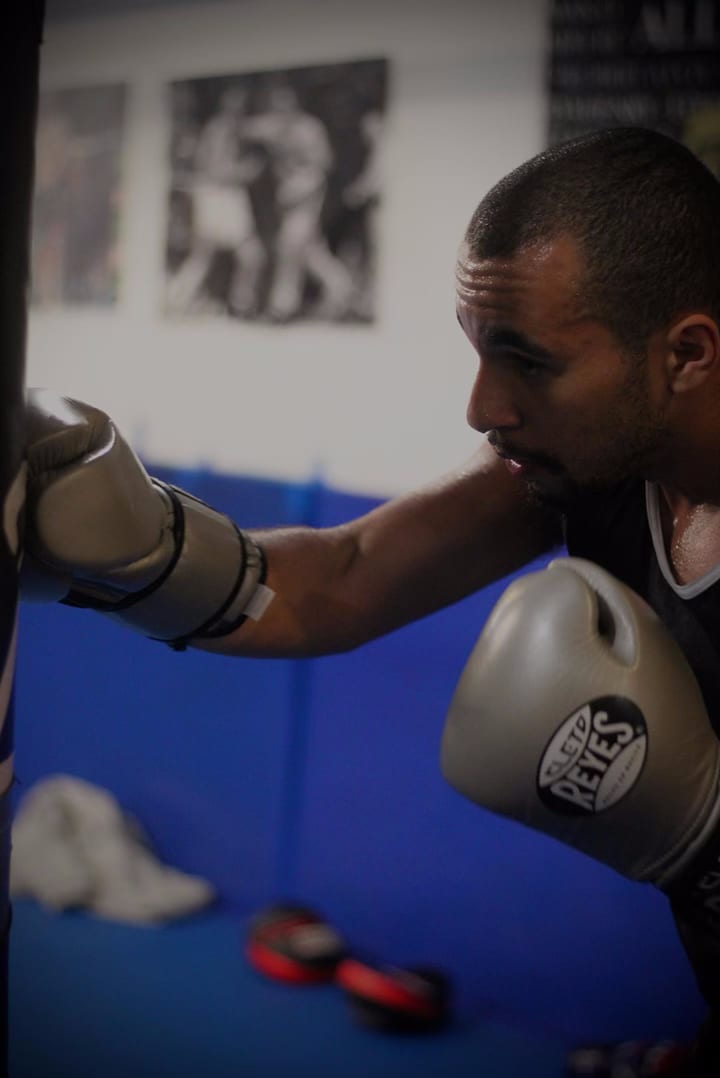
The nerves before a first boxing class are almost always about the unknown. So here is the unknown, removed.
Before you come
Wear athletic clothes you can move in and boxing shoes. Bring water, more than you think, and a towel. That’s it. Do not buy gloves yet. We’ll get you wrapped and gloved for your first session, and once you know you’re sticking around, a coach will tell you what’s actually worth spending money on.
Get there about ten minutes early so someone can walk you around before things start.
The first fifteen minutes
Warm-up. Movement, footwork, shadow boxing. This is where you’ll feel the most self-conscious and it’s also where it fades fastest, because everyone around you is looking at their own feet.
Then fundamentals: stance, guard, and the jab. Everything in boxing is built on those three things, and you’ll keep coming back to them for as long as you train here. Nobody starts with combinations.
Mitt work
This is the part that makes a boxing gym a boxing gym. A coach puts on pads and works with you one-on-one, watching your hands, your hips, your balance, and fixing what needs fixing while you’re actually doing it.
It is also, for most people, the moment boxing clicks. Hitting pads held by someone who knows what they’re doing feels completely different than hitting a bag alone.
Bags and conditioning
Rounds on the heavy bag to put the technique into your body, then conditioning to finish. By the end you’ll be tired in a way that’s hard to describe to people who haven’t done it, genuinely worked, not just sweaty.
The whole thing runs about an hour.
What will not happen
Nobody is going to make you spar. Nobody is going to put you in with someone experienced to “see what you’ve got.” Sparring at Ironhand is optional, always supervised, and only happens when a coach thinks you’re ready and you want to.
You’re also not going to be the worst person in the room, because there is no such thing here. We’ve had members start at seven years old and members start in their sixties. The class runs so beginners drill fundamentals while experienced boxers work at their level, same floor, same hour.
Afterward
Talk to a coach about how often you can realistically train, and we’ll put you on the membership that matches. Month to month, from one day a week up to five.
Then come back Thursday.
Keep reading
The Importance of Boxing Fundamentals: Why the Basics Win Fights
Stance, footwork, the jab, defense, and balance. Coach Ian Sampaga explains the boxing fundamentals every beginner needs and why skipping them caps how good you can get.
How Long Before You Can Spar? And How Long Until You Can Compete?
Most beginners spar within 3 to 6 months, but the real answer depends on the person. Coach Ian Sampaga explains what he looks for before clearing a boxer to spar, and how he decides when a fighter is ready to compete.